If you’ve ever seen the word “gypsy” in a text message, social media caption, or online conversation, you might wonder what it actually means. Is it describing a lifestyle, a culture, or simply a slang term?
In modern internet conversations, the word gypsy can carry several meanings depending on the context. Sometimes it refers to a nomadic lifestyle, sometimes it describes someone who loves travel and freedom, and in other cases it relates to a specific ethnic group with deep cultural history.
Understanding the gypsy meaning in text, slang, and everyday language is important because the word can be used casually online but may also have sensitive cultural implications. This guide explains the meaning, origin, modern usage, and examples of the word gypsy, all updated for 2025.
What Does “Gypsy” Mean? (Definition & Origin)
The word gypsy traditionally refers to the Romani people, an ethnic group that originally migrated from Northern India around 1,000 years ago and spread across Europe and other parts of the world.
Historically, many Romani communities lived a nomadic lifestyle, traveling from place to place rather than settling permanently in one location. Because early Europeans mistakenly believed they came from Egypt, they called them “Egyptians,” which eventually evolved into the word “Gypsy.”
Traditional Meaning
The traditional definition of gypsy includes:
- A member of the Romani ethnic group
- Someone historically associated with a traveling or nomadic lifestyle
- A community with unique traditions, music, language, and culture
However, in modern times the word can have different meanings depending on context.
Gypsy Meaning in Text or Online Slang
In texting, social media, and casual conversations, gypsy is sometimes used more loosely as slang.
1. Someone Who Loves to Travel
One of the most common slang meanings describes someone who travels frequently and enjoys a free-spirited lifestyle.
Example:
Friend 1: Where are you now?
Friend 2: Spain this week, Italy next week 😎
Friend 1: Wow, you’re such a gypsy!
Here, the word implies that the person moves around a lot and loves exploring new places.
2. A Free-Spirited or Independent Person
On social media, especially Instagram or TikTok captions, gypsy is sometimes used to describe someone who feels wild, adventurous, or independent.
Example caption:
“Living my best gypsy life ✨🌍”
This suggests a lifestyle focused on freedom, travel, and adventure.
3. Someone Who Moves Frequently
In everyday texting, people might jokingly call themselves a gypsy if they move homes, cities, or jobs often.
Example:
“I’ve lived in five cities in three years. I’m basically a gypsy now.”
Again, the meaning is constant movement, not necessarily the cultural identity.
Examples of “Gypsy” in Conversations
Seeing real-life examples can help you understand how the word is used in text messages or online discussions.
Example 1: Travel Conversation
Sarah: Where’s your next trip?
Emily: Thailand next month!
Sarah: You’re such a gypsy traveler 😂
Meaning: Someone who travels frequently.
Example 2: Lifestyle Caption
“Sunsets, road trips, and freedom. My gypsy soul loves this life.”
Meaning: Someone who feels adventurous and free-spirited.
Example 3: Moving Often
Friend: Didn’t you just move last year?
You: Yep… now I’m moving again 😅
Friend: Total gypsy lifestyle.
Meaning: Moving from place to place.
Example 4: Casual Joke
Friend: Where do you live now?
Friend 2: Honestly, I’m not even sure anymore 😂
Friend: True gypsy energy.
Common Mistakes or Misunderstandings
Because the word gypsy has both cultural and slang meanings, misunderstandings can happen easily.
Here are some common mistakes.
1. Assuming It Only Means “Traveler”
Many people think gypsy simply means traveler, but historically it refers to the Romani ethnic group.
Using it only as slang can sometimes ignore its deeper cultural meaning.
2. Ignoring Cultural Sensitivity
Some Romani communities consider the word gypsy offensive because it has historically been used in negative or stereotypical ways.
For example, phrases like:
- “gypped” (meaning cheated)
- negative stereotypes about Romani people
Because of this, some prefer the term Romani instead.
3. Confusing It With Fashion Trends
You might see terms like:
- gypsy style
- boho gypsy fashion
- gypsy aesthetic
These usually refer to bohemian-style clothing, flowing fabrics, jewelry, and earthy colors—not the actual culture.
Related Slangs or Similar Words
If you’re exploring slang or internet language, several related words often appear alongside gypsy.
Common Related Terms
1. Boho (Bohemian)
A style or lifestyle associated with artistic freedom and unconventional living.
Example:
“She has a total boho vibe.”
2. Wanderlust
A strong desire to travel and explore the world.
Example:
“My wanderlust is kicking in again.”
3. Nomad
Someone who moves from place to place rather than living permanently in one location.
Example:
“I’m working remotely and living like a digital nomad.”
4. Free Spirit
A person who lives freely without worrying too much about rules or expectations.
Example:
“She’s always been a free spirit.”
Internal Linking Suggestions (SEO)
If you run a blog about slang or word meanings, you can link to related articles such as:
- Wanderlust Meaning in Text
- Boho Meaning in Slang
- Nomad Meaning in Chat
- Free Spirit Meaning in Social Media
This helps improve SEO and reader engagement.
Where the Word “Gypsy” Is Commonly Used Online
Even in 2025, the word still appears across many digital platforms.
1. Instagram Captions
Travel influencers sometimes use phrases like:
- gypsy soul
- gypsy traveler
- wild gypsy heart
These captions usually describe adventurous lifestyles.
2. TikTok Posts
Travel or lifestyle videos may include hashtags such as:
- #GypsyLife
- #GypsySoul
- #ModernGypsy
3. Blogs and Travel Communities
Travel bloggers sometimes use the word metaphorically to describe constant exploration.
Example:
“My inner gypsy always wants to explore new countries.”
4. Casual Texting
Friends may use the word jokingly when someone moves or travels often.
Example:
“You’ve been to three countries this year. Total gypsy.”
How to Use “Gypsy” Correctly in Text or Chat
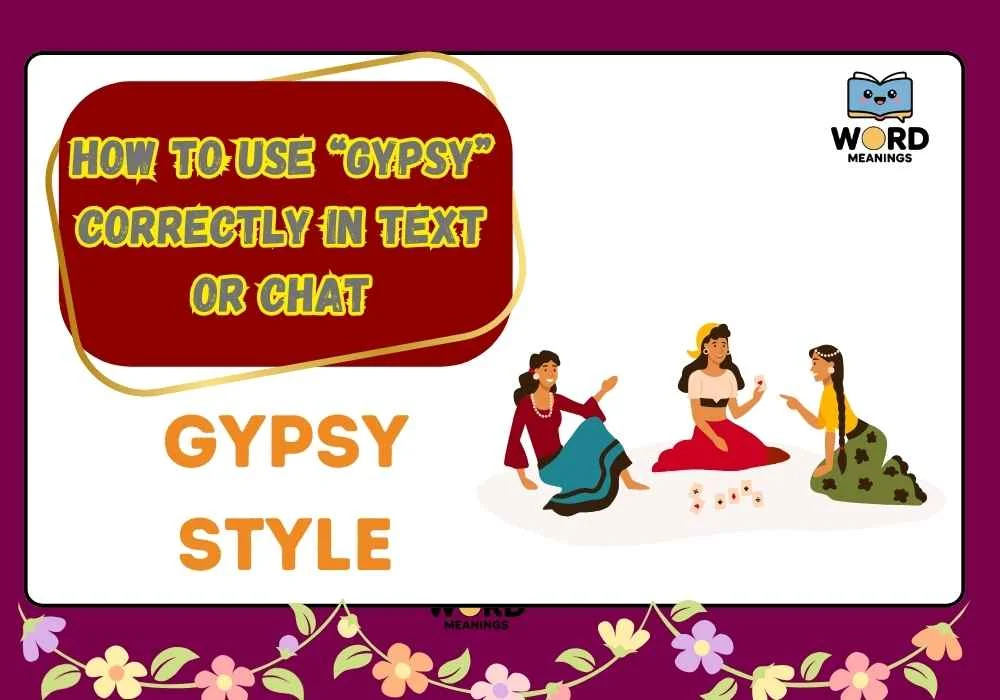
If you want to use the word naturally in conversation, follow these tips.
Good Usage
You can use it when referring to:
- traveling a lot
- living freely or adventurously
- moving frequently
Example:
“I can’t stay in one place long. My gypsy soul needs adventure.”
Situations to Be Careful With
Because the word has cultural significance, avoid:
- stereotypes about Romani people
- jokes about ethnicity
- using it in negative ways
Instead, if you’re referring to travel or lifestyle, you might choose alternatives like:
- wanderer
- nomad
- traveler
- free spirit
Quick Summary of Gypsy Meaning
Here’s a simple breakdown:
- Traditional meaning: A member of the Romani ethnic group.
- Slang meaning: Someone who travels often or lives freely.
- Online usage: Travel captions, lifestyle posts, or jokes about moving frequently.
- Important note: The word can be sensitive in cultural contexts, so use it carefully.
Conclusion:
The word gypsy has a long and complex history. Traditionally, it refers to the Romani people, an ethnic group with a rich culture and centuries-old heritage. However, in modern online conversations, the word is often used more casually to describe someone who loves travel, freedom, and adventure.
Because of its historical and cultural significance, it’s important to understand the context when using the word. In texting or social media, it might simply describe a free-spirited lifestyle, but in other situations it can refer to a specific cultural identity.
As internet language continues to evolve, learning the meanings behind words like gypsy helps you communicate more clearly and respectfully online.
Updated for 2025, this guide should help you understand how the word is used in texting, slang, and digital conversations.
💬 Now it’s your turn:
What’s your favorite slang word you’ve learned online recently? Share it in the comments!