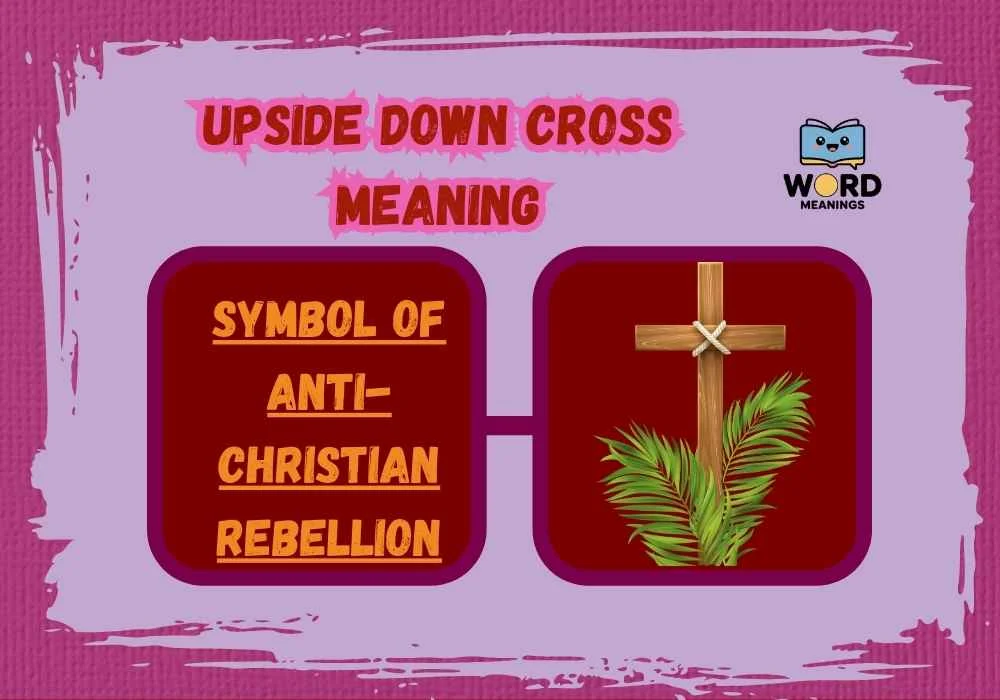
If you’ve ever seen an upside down cross, you might have felt a shiver of curiosity—or even unease. This symbol pops up in movies, music, tattoos, and online discussions, but its meaning is often misunderstood. Is it evil? Anti-Christian? Or something entirely different?
In today’s digital world, where symbolism spreads fast on social media, understanding the upside down cross meaning is important. Whether you’re discussing culture online, choosing a tattoo, or simply curious, knowing the history and context can prevent confusion and misinterpretation.
Updated for 2026, this guide explores the origins, cultural significance, misconceptions, and how the upside down cross is used in modern contexts.
What Does the Upside Down Cross Mean? (Definition & Origin)
At its core, the upside down cross is a Christian symbol with historical roots, though pop culture often portrays it differently.
Definition
- A cross inverted, where the vertical beam points downward.
- Often referred to as the Cross of Saint Peter in religious contexts.
- In modern media, sometimes associated with rebellion or anti-Christian symbolism.
Historical Origin
The upside down cross dates back to the 1st century AD:
- According to Christian tradition, Saint Peter, one of Jesus’ apostles, was crucified upside down because he felt unworthy to die in the same way as Jesus.
- Therefore, the inverted cross originally symbolized humility, martyrdom, and devotion.
Key point: The upside down cross was a holy symbol, not a negative or evil sign.
Modern Misconceptions
Over time, the symbol took on a darker reputation:
- Movies & horror culture: The symbol is often used to evoke fear, satanic imagery, or rebellion.
- Heavy metal & punk music: Bands and album covers sometimes use it as a symbol of anti-establishment or shock value.
- Pop culture tattoos: Many adopt it for aesthetic or edgy purposes without knowing the religious origin.
⚠️ Important: Context is everything. An upside down cross in a church painting vs. a metal album cover conveys very different meanings.
How to Use or Recognize the Upside Down Cross
Whether online, in fashion, or in art, the meaning depends on intent and context.
Religious Context
- Christianity: Represents Saint Peter, humility, and martyrdom.
- Found in churches, religious art, or texts discussing Christian history.
Secular / Pop Culture Context
- Fashion & tattoos: A symbol of rebellion or alternative culture.
- Music & media: Often associated with gothic or metal genres.
- Internet memes & forums: Used humorously or ironically.
Examples of Upside Down Cross Usage
Example 1: Religious Art
- In a cathedral, you might see an upside down cross painted or carved to honor Saint Peter’s humility.
Example 2: Music Album Cover
- Heavy metal bands sometimes display an upside down cross as part of a rebellious or shocking aesthetic.
Example 3: Tattoos & Fashion
- A tattooed upside down cross may reflect personal rebellion, aesthetic preference, or interest in alternative culture.
Example 4: Online Meme / Social Media
- Users on platforms like Instagram, TikTok, or Twitter may post the symbol jokingly: “Me in the morning 🙃✝️”
Common Mistakes or Misunderstandings
1. Assuming It’s Always Evil
❌ Incorrect: All upside down crosses are satanic.
✔️ Correct: Historically, it symbolizes Saint Peter’s humility and devotion.
2. Ignoring Context
- A cross on a church altar ≠ a cross on a metal album cover.
- Always consider where and why the symbol is being used.
3. Overgeneralizing Tattoos or Emo Culture
- Many tattoos are aesthetic choices rather than religious statements.
- Don’t assume someone is anti-religion just because of the symbol.
Related Symbols & Abbreviations
For those interested in symbolism or internet culture, here are some related terms:
- Regular Cross (✝️): Classic Christian symbol representing Jesus’ crucifixion.
- Ankh (☥): Ancient Egyptian symbol for life.
- Inverted Pentagram (★): Often associated with occult or satanic imagery.
- Crucifix Emoji (✝️): Frequently used online in religious or symbolic contexts.
Why Understanding Symbolism Matters in 2026
Symbols travel fast online, and misunderstandings spread even faster. Knowing the upside down cross meaning helps you:
- Interpret memes, posts, or messages correctly
- Avoid unnecessary offense in conversations
- Understand historical and religious context
- Discuss culture and symbolism intelligently
Conclusion:
The upside down cross is a fascinating symbol with layers of meaning:
- Historically: A Christian emblem honoring Saint Peter’s humility.
- Modern pop culture: Often represents rebellion, alternative culture, or edgy aesthetics.
- Misunderstood: Frequently mistaken for an inherently evil or satanic symbol.
Understanding its origin and context allows you to appreciate its richness rather than fear it.
In 2026, whether you see it online, in art, or in fashion, remember that symbols are more than meets the eye. The upside down cross is a perfect example of history, culture, and modern reinterpretation colliding.
💬 Have you seen the upside down cross in media or online? Share your thoughts or experiences in the comments!