If you’ve recently seen the word “après” in a message, caption, or social media post, you might be wondering what it actually means. The word appears frequently in lifestyle posts, travel content, and casual conversations online, especially in phrases like “après ski.”
Understanding terms like après is useful because modern online communication often mixes foreign words, slang, and casual expressions. People use them to sound stylish, expressive, or simply shorten their messages.
In this guide, we’ll explain the après meaning, where it comes from, how it’s used in text or social media, and the most common examples you’ll see online. This article is updated for 2025, so it reflects how people actually use the word today in chats, captions, and digital conversations.
What Does “Après” Mean? (Definition & Origin)
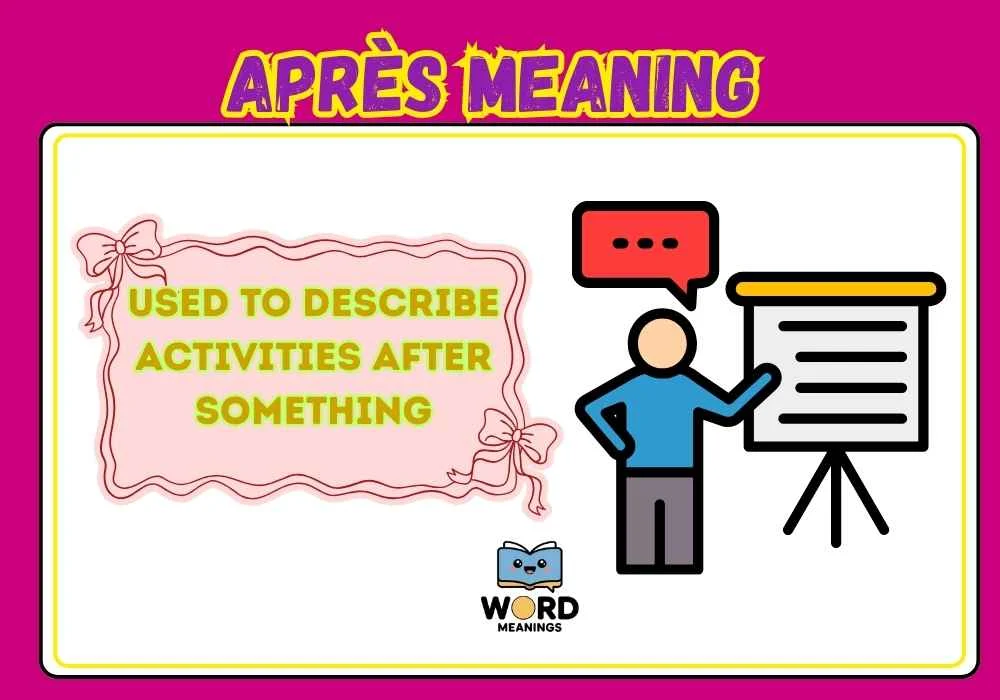
The word “après” comes from the French language and simply means:
“After” or “Later.”
It’s used to describe something that happens after a particular activity or event.
For example:
- Après ski – social activities after skiing
- Après work – relaxing after work
- Après dinner – something that happens after dinner
Even though it’s a French word, English speakers often use it casually in lifestyle conversations, especially in travel or luxury-related contexts.
Origin of the Word
The term became widely known through the phrase:
Après-ski
This phrase refers to socializing, drinking, or relaxing after a day of skiing.
It became popular in European ski resorts and eventually spread worldwide through:
- travel culture
- social media posts
- lifestyle blogs
- Instagram captions
Today, people use après in a broader sense to describe anything that happens after an activity.
How to Use “Après” in Texts or Chat
In modern texting and online communication, après is often used to sound stylish, playful, or trendy.
Here are some common ways people use it.
1. Referring to After-Activity Plans
People sometimes use après instead of “after.”
Example:
Friend 1: Gym done 💪
Friend 2: Nice! Coffee après?
Meaning:
“Coffee after the gym?”
2. Social Media Captions
Lifestyle creators often use après in captions to describe what happens after an event.
Examples:
- “Après dinner dessert 🍰”
- “Après work drinks tonight.”
- “Après gym smoothie.”
It adds a slightly elegant or European vibe to the sentence.
3. Travel or Vacation Posts
Travel content frequently uses the word après, especially in winter tourism.
Example captions:
- “Après ski vibes ❄️”
- “Hot chocolate après skiing.”
- “Après beach cocktails.”
4. Casual Jokes in Chats
Friends sometimes use the word humorously.
Example:
Friend: Survived Monday 😩
Other Friend: Pizza après work?
Examples of “Après” in Conversations
To better understand how the word appears in real conversations, here are a few examples.
Example 1: After Work Plans
Sam: Work was exhausting today.
Alex: Same here.
Sam: Drinks après work?
Meaning: Drinks after work.
Example 2: After a Workout
Jamie: Just finished the gym.
Chris: Nice! Smoothie après?
Meaning: Smoothie after the gym.
Example 3: Social Media Caption
“Après dinner coffee ☕️.”
Meaning: Coffee after dinner.
Example 4: Vacation Post
“Hot tub time – après ski.”
Meaning: Relaxing after skiing.
Common Mistakes or Misunderstandings
Although après is simple, people sometimes misunderstand how to use it.
Let’s clear up a few common mistakes.
1. Thinking It’s Internet Slang
Unlike abbreviations like LOL or BRB, après is not slang.
It’s actually a real French word used in English conversations.
2. Incorrect Spelling
The correct spelling includes an accent:
Après
However, in casual texting, many people write:
- apres
- apres-ski
Both versions are commonly understood online.
3. Using It in Formal Writing
Although the word appears in casual writing, it’s usually better to use “after” in professional or academic writing.
For example:
Better in formal writing:
“Meeting after lunch.”
Instead of:
“Meeting après lunch.”
Related Words and Expressions
If you’re learning the meaning of après, here are some similar expressions that people use in modern communication.
Common Words Related to “After”
- Later
- Afterward
- Post-event
- Following
Popular Lifestyle Phrases
These phrases often appear online:
- Après ski – relaxing after skiing
- Après work – relaxing after work
- Après dinner – something after dinner
- Après party – a gathering after an event
Similar Casual Chat Expressions
Some texting phrases used similarly include:
- BRB – Be right back
- TTYL – Talk to you later
- AFK – Away from keyboard
- Later! – Ending a conversation
When You Should Use “Après”
Using après can make conversations sound stylish or playful, but context matters.
Good Situations to Use It
You can use après in:
- casual text messages
- social media captions
- lifestyle blogs
- travel posts
- friendly conversations
Example:
“Ice cream après dinner.”
Situations to Avoid
Avoid using it in:
- formal emails
- professional reports
- academic writing
- business communication
Instead, simply use:
“after”
How “Après” Is Used in 2025 Internet Culture
In 2025, the word après is commonly used in lifestyle and social media culture.
Here are a few current trends.
1. Instagram Lifestyle Captions
Influencers and travel creators often use the word to make captions sound more sophisticated.
Example:
“Wine time – après work.”
2. Food and Café Culture
Food bloggers often use phrases like:
- Après brunch coffee
- Après dinner dessert
3. Meme Culture
Some people use the word humorously.
Example:
“Nap time – après doing absolutely nothing.”
Quick Summary: Après Meaning
Here’s a simple breakdown of the après meaning:
- Après is a French word meaning “after.”
- It’s commonly used in phrases like après ski.
- People use it in texts, captions, and casual conversations.
- It often appears in travel, lifestyle, and social media posts.
- The word adds a stylish or playful tone to sentences.
Conclusion:
The word après is a simple but stylish expression that has become popular in modern conversations, especially online. Originally a French word meaning “after,” it’s now widely used in English when talking about activities that happen after something else.
From “après ski” at mountain resorts to “après work drinks” in casual chats, the word has evolved into a trendy way to describe post-activity plans. Social media and travel culture have played a big role in spreading its popularity.
As of 2025, you’ll likely see après used in captions, text messages, and lifestyle content. Now that you understand the meaning and context, you can recognize it easily—or even start using it yourself in conversations.
💬 What’s your favorite texting or social media phrase? Share it in the comments and join the conversation!